Getting Around

Public transportation in Sydney: not useless

I’m given an Opal card that gives me access to public transportation in Sydney as part of my program fees. It gives me access to the buses, light rails, and ferries up to a two-hour distance around the Sydney city-center.

I’m from Los Angeles which is probably one of the worst places to use public transport. It’s sparse, unreliable, and unsafe after dark. I didn’t use public transportation daily until I came to Sydney where I fell in love with my morning commute and weekend excursions. My favorite by far is the ferry.
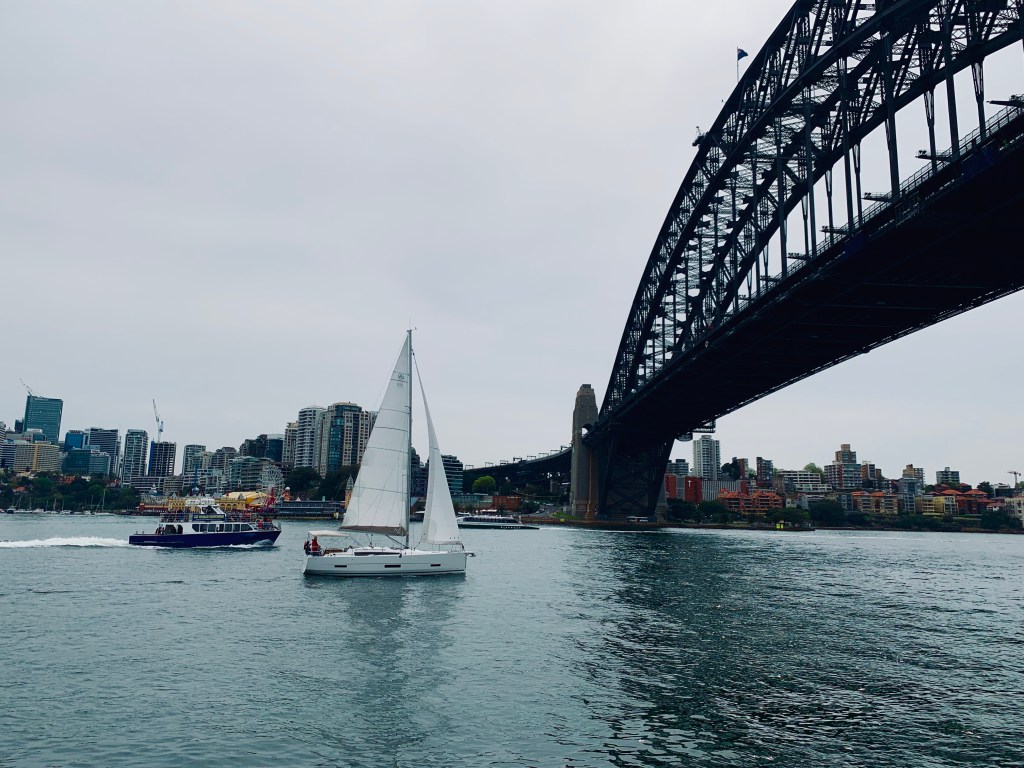
I take advantage of any opportunity I get to take the ferry around the Sydney harbor. I walk straight up the stairs to the top deck and sit in middle-bench of the very front. I let the wind chill the tip of my nose and blow my hair into a frenzy. Yet, I find it a peaceful experience compared to the bustle of streets of Central Business District. Rather than dodging people on foot on the sidewalk, I prefer the smell of salt air and the mist that reaches my face as the waves crash against the boat.

The harbor’s sea lanes have a long history of carrying Sydney residents when boating was the best form of transportation, but the degree to which life is centered around the harbor in Sydney to this day is noteworthy. It reminds me of my own experience in Long Beach and how life goes by with sand in between my toes on the shore.
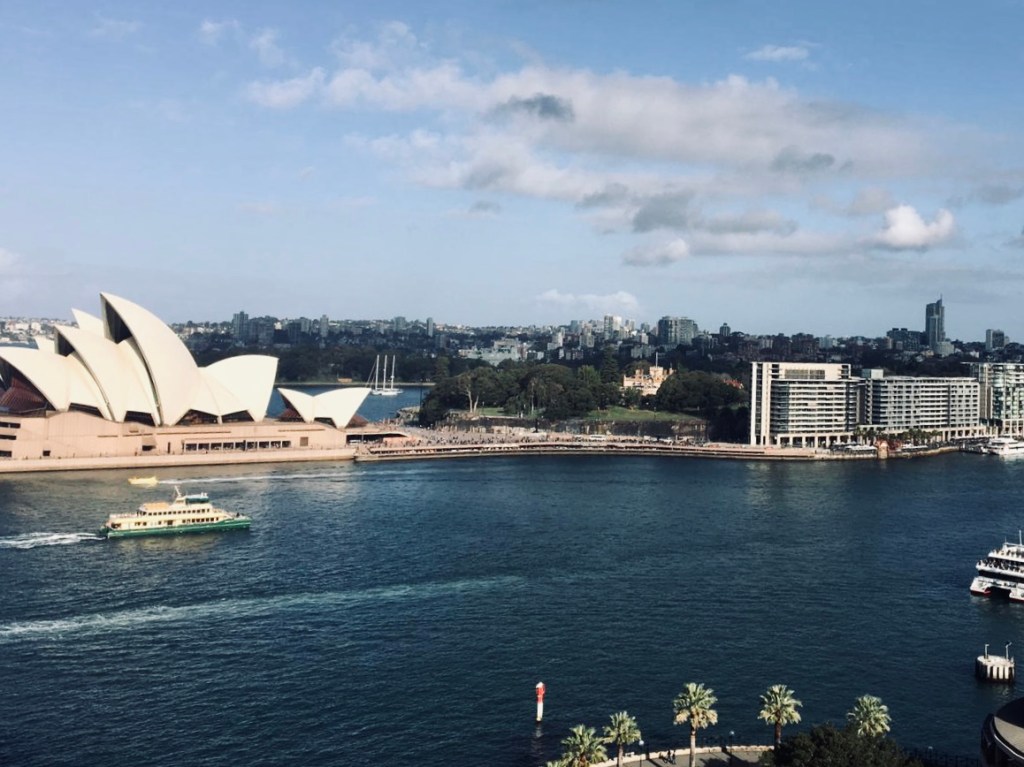
My farthest destination using the ferry was Manly Beach. Settlers called it that because the Aboriginal men living there were, in their words — “manly.” This name-it-for-what-it-is style is common throughout Sydney. Botany Bay is named for the interesting botany, Double Bay is a double-bay, and Rose Bay had lots of wild roses — thoughtful. Manly Beach is one of my favorite places because it’s only accessible by ferry unless you’re willing to drive an extra hour around the city. Nestled on the far north-east corner of the harbor overlooking the Pacific Ocean, Manly is a laid back, sleepy beachside town where tourists are less common.

I also like using the light rail in Sydney. It’s a great way to access the periphery of Sydney because they mostly lead to the outer edges for commuters. The light rail is the best way to get to the airport because it leads right into both the international and domestic terminals. The only negative about the light rail is they don’t come as frequently as the ferries and buses.

Buses are probably the least useful for my particular day-to-day life in Sydney. While they are frequent, the traffic around Central Business District is too heavy — making walking the better option.

This makes me think wonder how different my hometown would be with adequate public transportation. My wild guess is there’d be less crippling traffic and less greenhouse gas emissions, but that’s just my modest proposal.
Appreciating Aboriginal Culture in Australia

Sometimes on point and sometimes not so much 

I haven’t met a single person of aboriginal descent over the few weeks I’ve been in Sydney, however, the faces I’ve yet to meet have held my interest more than any other people in Australia. I’m consistently met with conversation or political artistic dissent surrounding them in the streets or museums, but never face-to-face. I’ve seen the well-intentioned irrelevant attempts to reconcile the past that turn aboriginal people into tokens rather than giving them equal status. On the other hand, I’ve seen strides made, and it’s important to know the difference. My time in Sydney has shown me both.

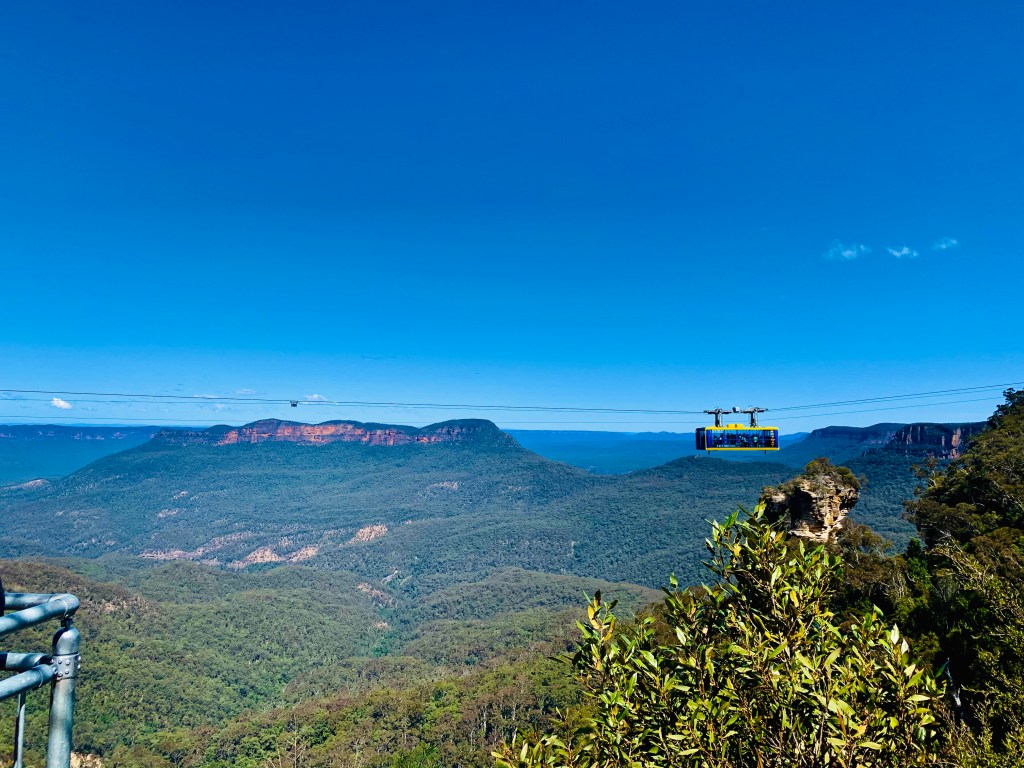
Our first trip as a group took us to the Blue Mountains — a two-hour drive west out of the city center in Darling Harbor. The town at the base of the mountain reminds me of Big Bear in Southern California. A quaint, sleepy town with small family-owned businesses used to tolerating tourists.

Blue Mountains

The landscape is dense with ferns on the ground, white cockatoos with their flamboyant yellow crests, and gum (eucalyptus) trees for mile after mile — the perfect setting for a new generation of Jurassic Park movies. I felt if I wasn’t constantly on-guard a pterodactyl would swoop me away. My impression of Australian wildlife being hostile still stands.

The tour guide was a salt-and-pepper sailor-type that liked to make crude jokes. We got along great. One of the first things he pointed out were the tiny burrows in the dirt along the trail. They belonged to one of the world’s deadliest spiders. He gave little hope of survival by mentioning the spider’s fangs could pierce through a steel toe shoe. To my luck, I decided to wear my strappy Chacos. 

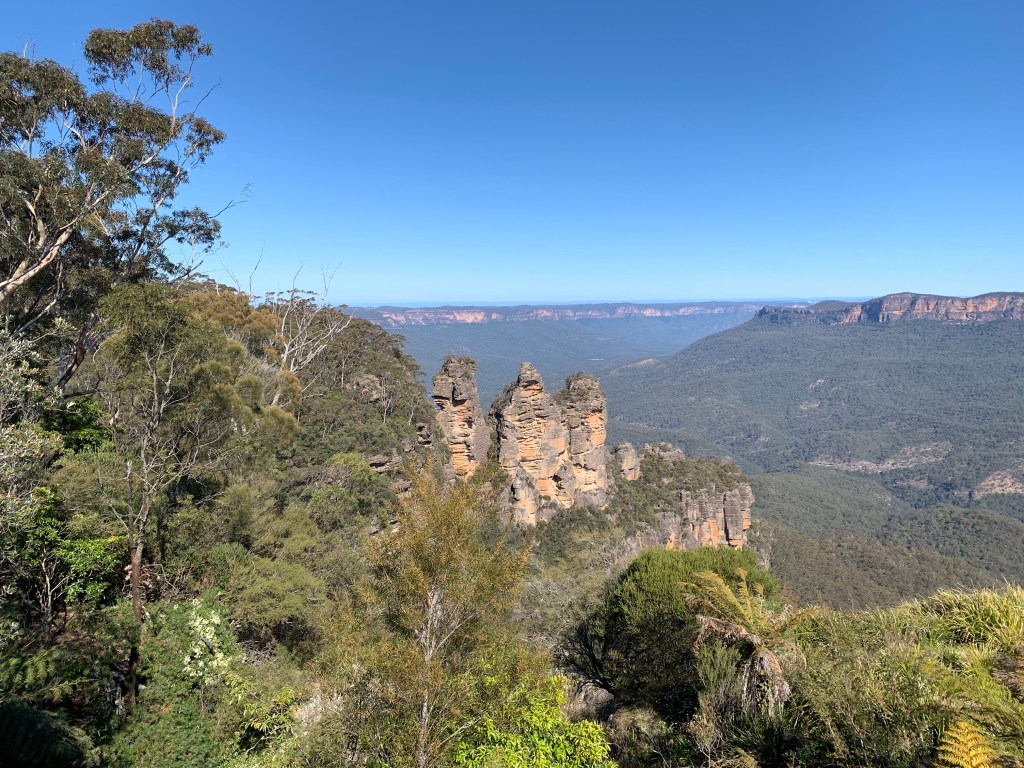
All 53 of us walked up the mountain until we came to a vista with three naturally occurring stone pillars in the distance. He told us the local aboriginal story behind their presence. He said a father escaping a giant serpent turned his three daughters into stone so they wouldn’t be eaten. He promised to return to change them back into humans, but he never could. They’ve stood there ever since. 

The tour guide quickly commented after the story by saying we could either believe the story or that millions of years weather shaped the mountain range. In retrospect, I don’t understand why both can’t be true. That comment gave a false choice that insisted we use “logic” to make the best decision. However, our logic is often grounded in what we know from the scientific method. To the aboriginal people of the Blue Mountains, a man using magic to turn his children into stone for their protection is logic.

Three Sisters, Blue Mountains

We moved on from the three pillars to the next stop where our tour guide showed us traditional aboriginal face paints made from putting water on different frail stones. I’m sure this kind of practice occurs on special occasions, but it suggests that aboriginals can only exist in a romanticized form as someone being one with nature and wearing face paint — and not as any other person living in 2019. 

This reminds me of the recent Dior Sauvage fragrance campaign controversy. The premise of the fragrance commercial is that Johnny Depp leaves the city and his possessions to live as, well, a savauge. Adding a letter to a word that’s problematic in this context and making it French doesn’t make it okay — or art. Yet, it’s a perfect example of romanticizing indigenous people. There are indigenous people that do live off the land in a pastoral lifestyle, such as some of the tribes in the Amazon, but there is an overwhelming lack of variety in how indigenous people are portrayed in media. They are constantly used as a snapshot of the way things used to be without regard to the fact they’re cultures and practices have evolved with time and a changing world.

Our second group tour brought us to the Art Gallery of New South Wales where we saw everything from colonial period art to contemporary interactive video galleries. Loraine, our teacher on these excursions for the quarter, took us downstairs to the Aboriginal gallery. She explained that many of the pieces there were new additions to the museums because of a new movement calling for Aboriginal things to be viewed as art and not an artifact — which would be shown in a natural history museum. There were intricate designs on pieces of driftwood and canvases that covered an entire wall with colorful patterns. I wondered why anyone debated their legitimacy as art in the first place, however, I think it’s a move in the right direction. It truly places people of indigenous descent on the same level as true artists in the sense of the western world.

On my way home from Rose Bay recently, I noticed the Museum of Contemporary Art out of the corner of my eye from the ferry as it was pulling up to Circular Quay. It started to rain, so I decided to wait it out inside the museum. I discovered a gallery by well-known Aboriginal artists named Destiny Deacon. She had a whole gallery to herself to talk about her experience trying to navigate duel lives. One at home with her Aboriginal family, and the other with the people of Melbourne. 

I think the strides made in Australian culture to appreciate and include Aboriginal people have come a long way, but with much left to address, and the same can be said about the United States. We must understand that appreciating a group of people is not like staring at them through a glass window in a natural history museum but is passing them on the street and seeing them at work.

Cheers!

New Country, New Me

Reinventing my identity in my temporary home? Easy.

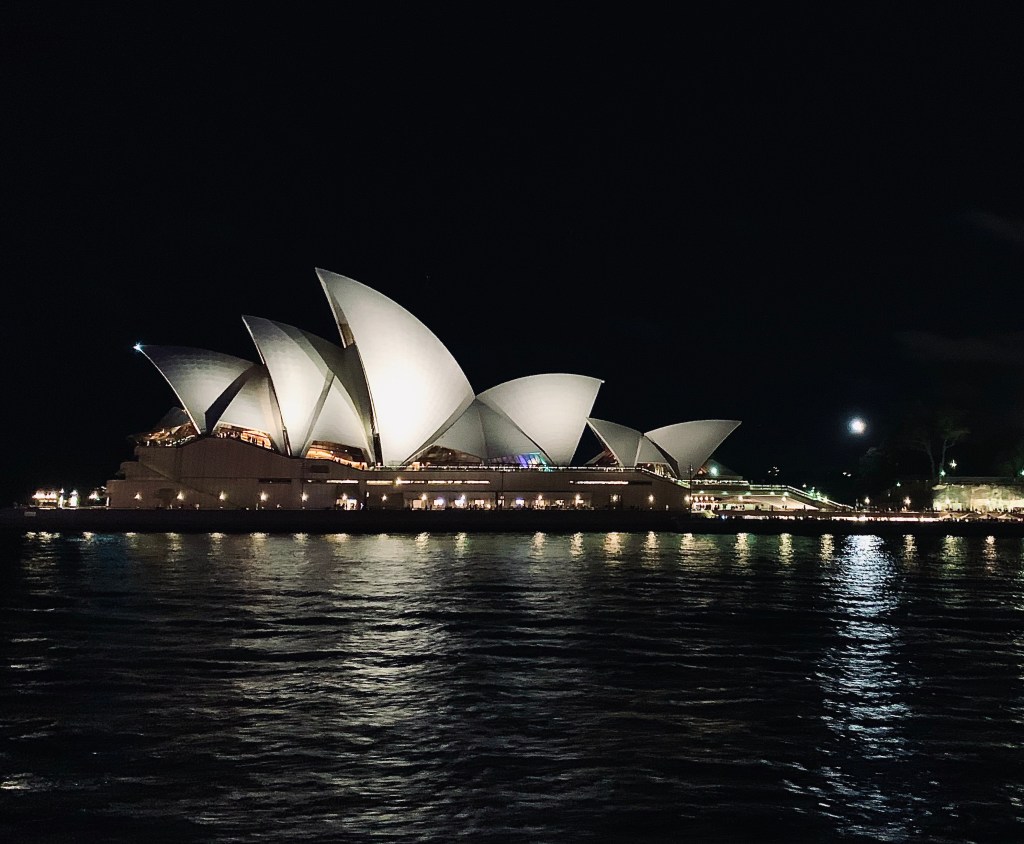
Sydney Opera House

I’ve moved many times throughout my life to the point where I’ve achieved professional-bubble-wrapper status — a useless skill that would do more harm than good if listed on my LinkedIn profile. I’ve moved from one neighborhood to the adjacent one, and each time, I feel like I have a new canvas, but moving more than 7,000 miles away from home is more like a public mural rather than a measly canvas. I can splash paint around in new interpretive styles, make a mess, and leave without a trace. They say there’s only five degrees of separation, but I don’t feel that way in Sydney — I feel I have the opportunity to reinvent myself as if I was the new kid on Mars.

Little did I expect to have an “Under the Tuscan Sun” moment so early in life, but here we are practicing for when I really need it. It helps that things are so similar here in Sydney because my focus is less toward survival than it is plunging myself into the local day-to-day lifestyle. That’s just me, though — diving in head first into the kids’ pool.

The existential question of ‘Who am I?’ clearly plays a role in this scenario which forced me to think. I started to think about where my personality comes from, how it’s manifested in my life, and informed my decisions. The first thought is my heritage.

I typically introduce myself in California according to my heritage — avoiding calling myself an American. My family has deep roots in the Mexican-American culture in Los Angeles, and my mother is from Central America. However, in Sydney I’ve noticed myself embracing being an American. My family immigrated from Mexico, Cuba, and Honduras which made me feel odd about labeling myself “American” up until this point. I always felt detached from the kind of America seen in a Norman-Rockwell-type painting. My family hasn’t been in the states for generation upon generation. None of them fought in any of the wars or set off in a wagon across the country on the Oregon Trail.

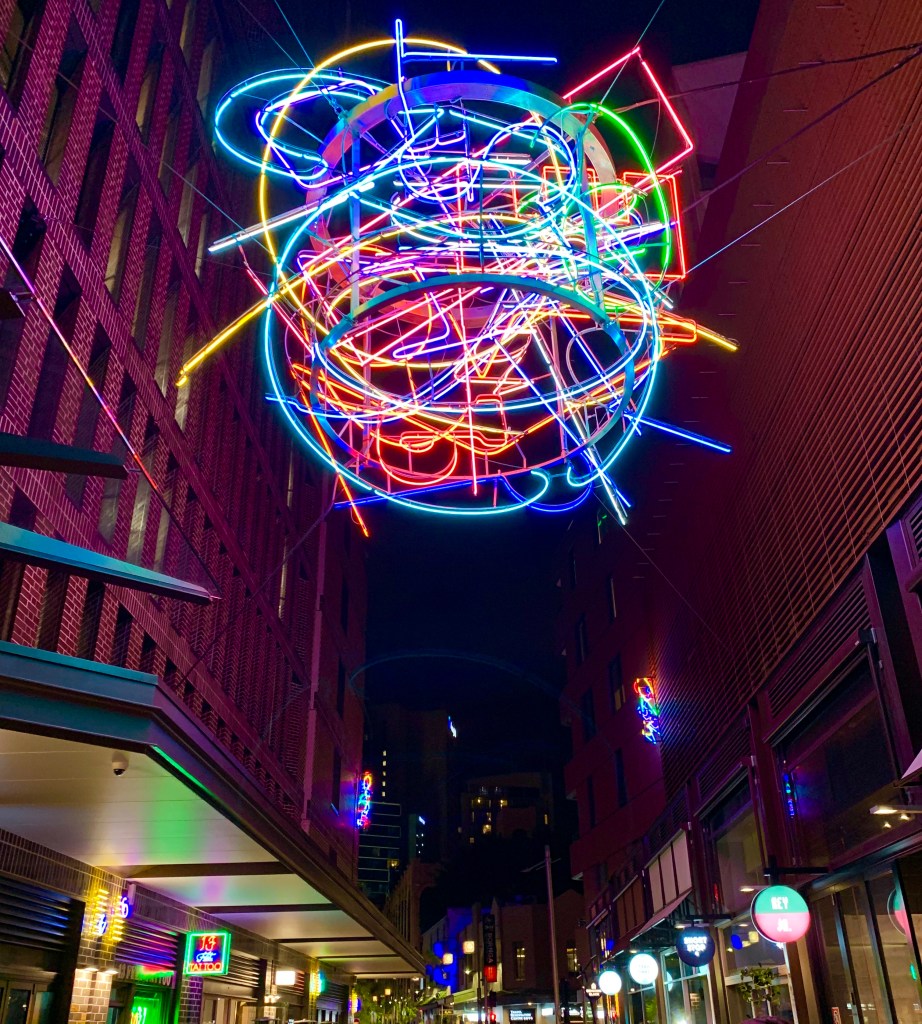
China Town

There’s something about being abroad that makes me want to connect back to the US in some way I can. There’s a sense of pride in where I’m from that I’ve never felt before. I’ve met locals and they, like everyone else, have grievances with how things are in one way or another. This trip is helping me to truly understand that people, no matter where you go, are just like me in so many ways.

I’m learning an important in lesson in the role that where I come from plays in my life. It’s a part of who I am and not the center of everything that makes up who I am. It’s not as important as what I choose to do with it. If I were to simply categorize myself I’d be cheating myself — possibly losing the opportunity to constantly surprise myself.

I have to have a bit of fun with the fact that absolutely no one knows who I am here. As a story-teller, I’ve crafted a few outrageous personalities and background stories. In one instance I claimed I’m a New York wasp trying to get away from my dysfunctional family and clear my head as far away as possible. Thanks, “Gossip Girl.”

I’m interested to see how my identity navigates itself here in Sydney.

Cheers!

As Above So Down Under

A lack of culture shock during my first week in Sydney

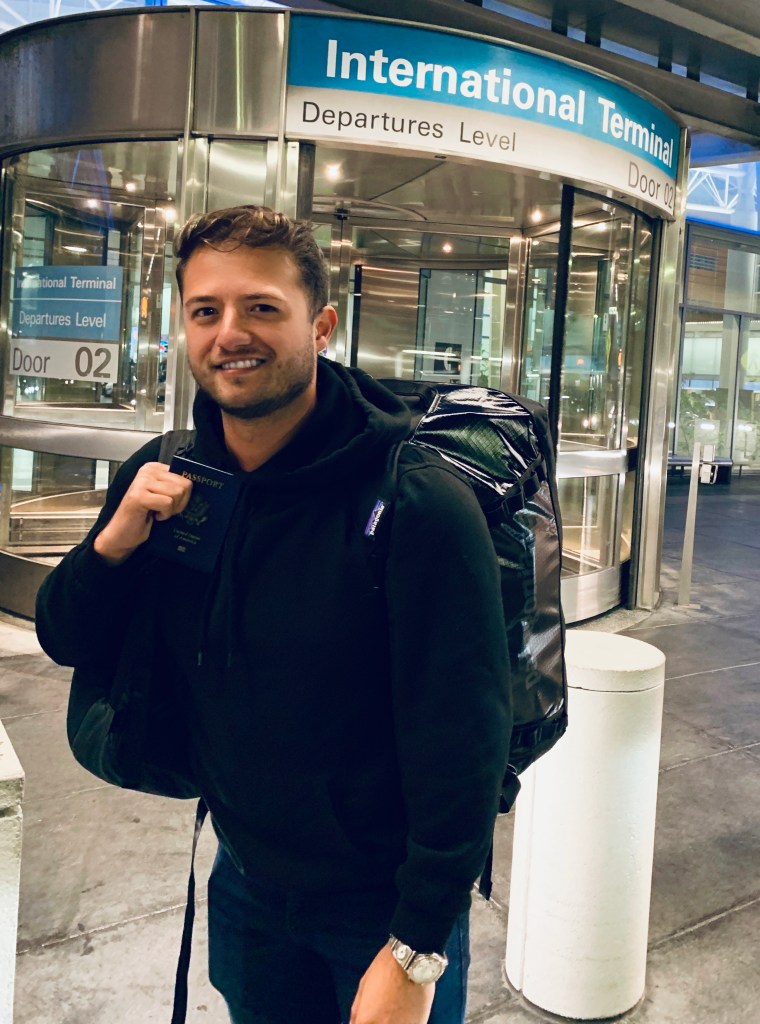
San Francisco International Airport

The flight from San Francisco to Sydney made LA traffic appear as peaceful as a hike through Runyon. A total of 17 hours of travel where I watched more Netflix and listened to more podcasts than I care to count.

My travels ended with me curbside at the airport on a rainy night wondering why there were no Ubers available in a bustling cosmopolitan city wreaking havoc on every other driver. I crossed the street toward the taxi pick up, and I looked to my right like I do in California. The sound of the bus horn in my left ear quickly reminded me that Australians drive on the left side of the road, and I jumped back on the curb — and looked to the left. The taxi man helped put my luggage into the van that I had all to myself. He told me Uber is fairly new in Australia. Before I could tell him the third number of my Airbnb address, he interrupted and said he knew where to go. “Lots of tourists stay there. Right in the heart of the city.”

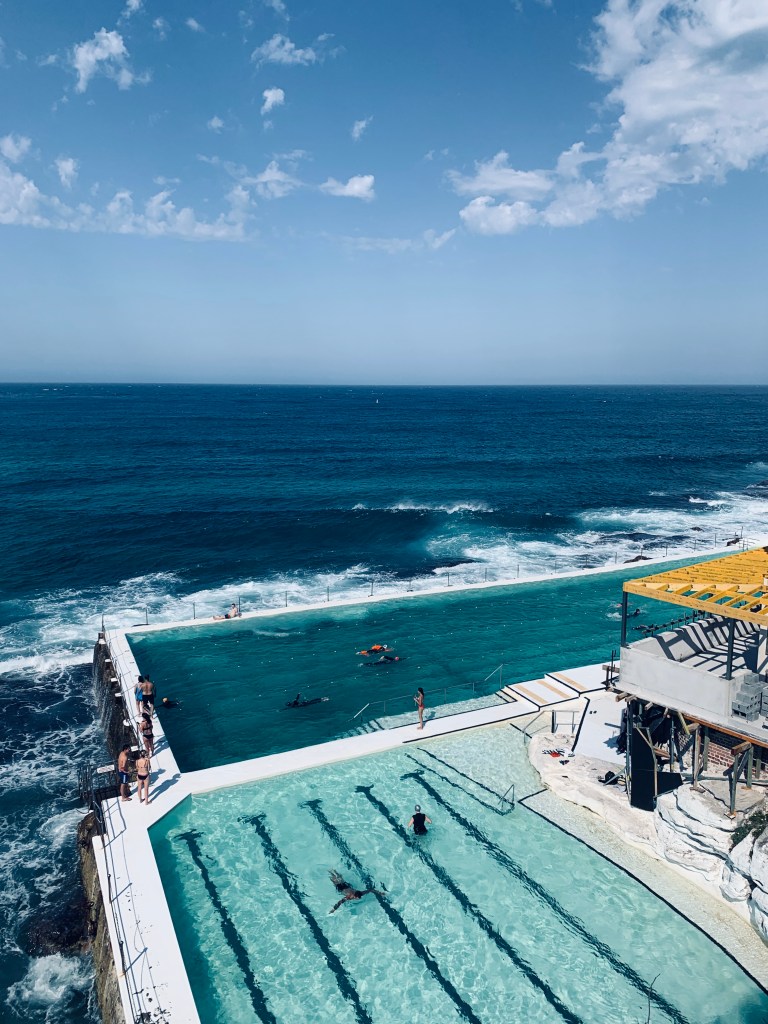
Bondi Beach

My desperation to not appear as a basic tourist told me to blurt out that I was in Sydney for school and an internship – an integrating experience beyond taking photos in front of the opera house. I didn’t, though. I waited to talk about my reasons for being in Australia. I asked questions about his life, and he told me he was from India and has lived in Sydney for eight years. He dropped me off in downtown at the base of a high-rise. I gave him a tip right before I remembered tipping isn’t standard in Australia.

I settled into my hotel, that’s my home for the next three months. The hotel used to be a wool factory — Australia’s biggest export at one point in time – and is now converted into a hotel with a polished industrial aesthetic. My roommate’s name is Sam, he’s the shy-friendly type. I’ve noticed he’s gone from just smiling at my jokes to letting out a soft chuckle. We’ve still got a ways to go. I threw down my bags and instantly fell asleep with my hoodie still on over my head.

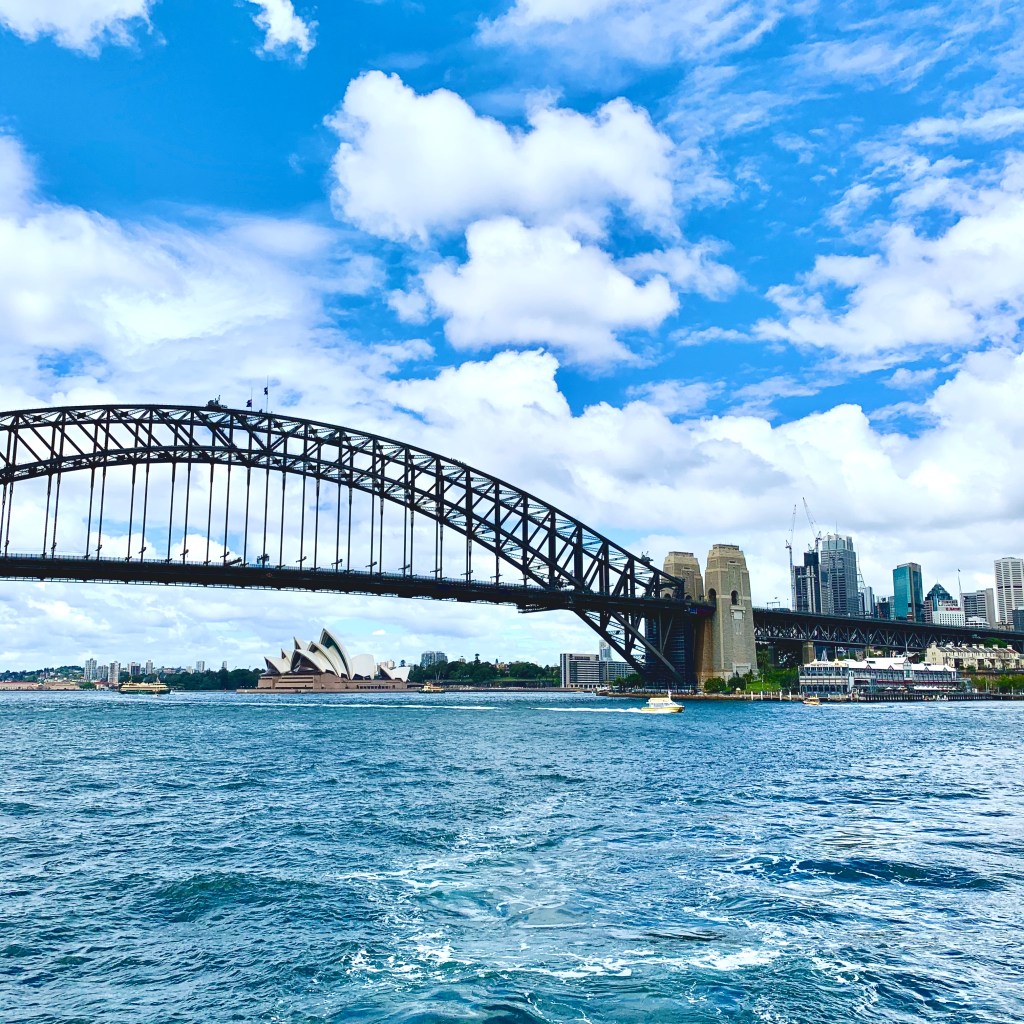
Sydney Harbor

I took a walk the next morning around the surrounding neighborhood, and in the light of day, things looked the same-ish. The plethora of eucalyptus trees, or gum trees in Australian terms, is a familiar backdrop that reminds me of my southern California home behind the bronzed European descendants that landed there generations ago. I notice how bustling the city is, and while it’s much cleaner than any city I’m used to in the states, I don’t necessarily feel like I’m in a new place. It reminds me of bizarro and superman or Gemini twins — just a little off from the usual.

I’m looking forward to finding the nuanced differences between where I come from and my new environment. I like that it won’t be as easy to find differences because it means that I just have to have a keen eye wherever I go.

Cheers!

Design a site like this with WordPress.com
Get started